
In daily life, many surfaces are prone to becoming soiled or scratched due to frequent contact, friction, exposure to dust and grime, or the wear and tear of regular cleaning.
Beyond routine cleaning, one effective solution is to apply a “surface protective film” to add an extra layer of defense. Such films are not limited to use in elevators; depending on the material of the film, the properties of the adhesive, and specific requirements, they can be applied to a wide variety of other surfaces.
01 | Elevator Buttons
Elevator buttons are a classic application for protective films.
Because they are touched by many people every day, the surfaces of these buttons easily accumulate fingerprints, dust, and oils—often requiring frequent wiping and cleaning.
Applying a protective film creates an initial barrier between the surface and the outside world. When the film becomes soiled or worn, it can simply be replaced with a new one.
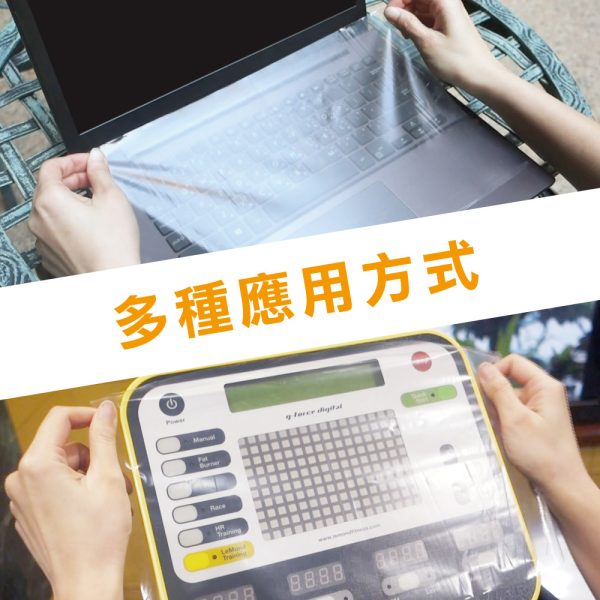
02 | Membrane Keypads and Control Panels
Membrane keypads and control panels are commonly found on machinery, electronic products, and various types of control equipment.
Since these surfaces are frequently pressed or wiped down, a suitable protective film can be selected based on the surface material, the operating environment, and specific adhesion requirements.
In cases where the original appearance and user interface must be preserved, a transparent protective film can be used to minimize any visual impact.
03 | Various Buttons and High-Contact Surfaces
Beyond elevators, there are many other places in our daily lives that are touched repeatedly throughout the day.
For example:
• Telephone keypads
• Machine buttons
• Remote controls
• Equipment control panels
• Buttons on public facilities
• Various types of control switches
These items share a common characteristic:
“They are used frequently, and their surfaces are subject to repeated contact.”
Therefore, provided that the product specifications and the intended surfaces are compatible, a protective film can serve as an effective means of surface protection.
Protective film cannot be applied “just anywhere”.
When selecting a protective film, do not focus solely on its transparency or how strongly it adheres.
In practical applications, you should consider the following:
① Surface Material
Adhesion performance can vary depending on the material, such as glass, metal, plastic, or ceramic tile.
② Surface Condition
Factors such as whether a surface is smooth, rough, brushed, painted, or specially coated can affect how well the film adheres.
③ Operating Environment
Environmental conditions—including temperature, humidity, dust exposure, and sunlight—can impact the performance of the protective film.
④ Duration of Use
Short-term protection versus long-term use places different requirements on both the film and the adhesive.
⑤ Removal Requirements
If the film needs to be removed later, consider not only its initial adhesion but also whether it will leave behind adhesive residue, and whether the substrate surface is suitable for such removal.
Applications of Wangjia Protective Films
The Wangjia ESTAPE protective film series offers a range of products tailored to various requirements.
Standard protective films are suitable for applications that demand transparent surface protection, light adhesion, and easy removal.
Wangjia Protective Film 2.0 is designed for scenarios requiring higher adhesion. Featuring a PET film base with an acrylic adhesive, it is suitable for surfaces such as elevator buttons, membrane panels, glass, ceramic tiles, stainless steel, and various types of control buttons.
Before full-scale application, it is recommended to evaluate the product specifications against the target surface and conduct a test on a small, inconspicuous area.
💡 Quick Facts
The key to protective films isn’t “the stickier the better,” but rather “choosing the right one is essential for effectiveness.”
Different surfaces, environments, and usage durations require different protective methods.
Therefore, when selecting a protective film, it’s usually more important to first understand “What surface do I need to protect? How long will I use it? What will the environment be like? What are the requirements for removal?” before choosing a suitable product, rather than simply pursuing high adhesion.


